
DNV Welder Qualification Certificate Test in Mumbai
- Home
- DNV Welder Qualification Certificate Test
Our Other Services
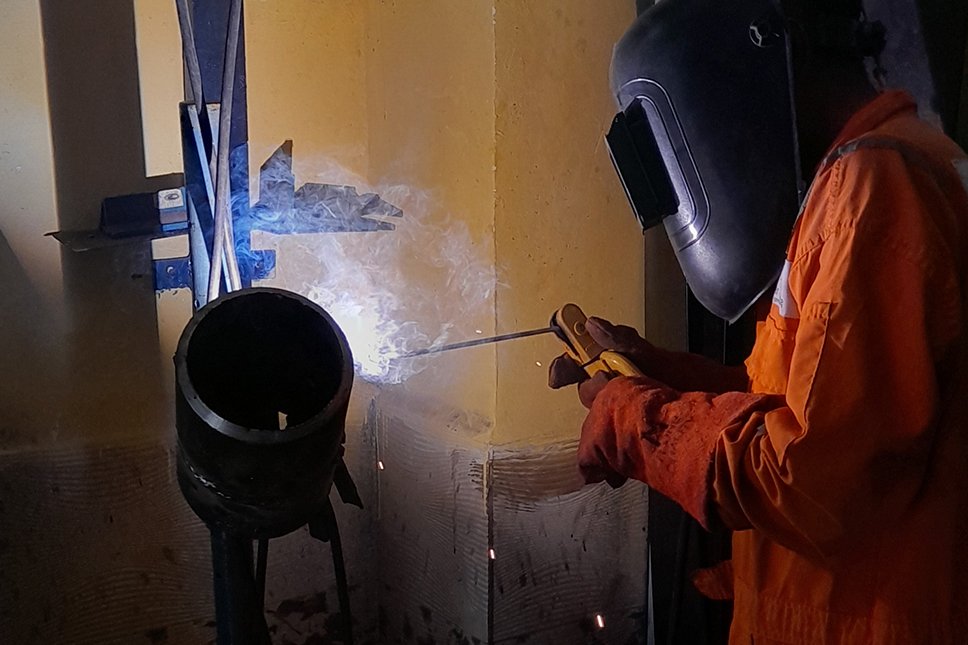
DNV Welder Qualification Test in Mumbai: Process, Positions, Validity and Cost
In short: The DNV welder qualification test is a practical weld test, witnessed by an authorised DNV surveyor, that proves a welder can produce sound welds to DNV rules. At Apeiwtes AWS Technology Center in Vasai (E), Mumbai, we prepare the welder, provide the test booth, machines, consumables and test coupons, and coordinate the surveyor visit. DNV issues the certificate, which is normally valid for two years when continuity records are maintained.
Quick facts
- Where: Mahalaxmi Industrial Estate, Vasai (E), Vasai-Virar, Thane-Palghar 401208. Welders travel to us from Mumbai, Navi Mumbai, Thane, Vasai-Virar, Nalasopara, Palghar, Bhiwandi and Boisar.
- Positions: 1G, 2G, 3G, 4G, 5G and 6G, on both plate and pipe.
- Processes: SMAW (stick), GTAW (TIG), GMAW and FCAW (MIG/MAG and flux-cored), and SAW.
- Materials: carbon steel, stainless steel, duplex, Inconel and aluminium.
- Who issues the certificate: DNV, after its authorised surveyor witnesses and accepts the test. We are the test facility and training provider, not the certifying body.
- Validity: normally 2 years, subject to continuity records signed by your employer every six months.
- Fees: quoted per welder on request, because cost depends on process, position, material and thickness. Call +91 8169178256 or message us on WhatsApp for a quote.
How the test works, step by step
- Tell us the scope. Share the process, position, material and thickness range your employer or project needs. We confirm which WPS applies and exactly what the test will qualify you for.
- Preparation. If you need practice first, you weld on the same machines, material and joint configuration the test will use, supervised by an AWS Certified Welding Inspector.
- Test coupon. On test day you weld the coupon in the booked position, following the WPS, in front of the DNV surveyor.
- Visual inspection. The weld is examined for undercut, porosity, profile and surface defects before anything else proceeds.
- NDT and mechanical testing. Depending on scope, the coupon goes for radiographic (RT) or ultrasonic (UT) testing, dye penetrant or magnetic particle testing, and bend or tensile tests.
- Certificate. Once the surveyor accepts the results, DNV issues the welder qualification certificate listing your name, the WPS, the process, the base and filler materials, and the thickness and diameter range you are qualified for.
Who should take this test, and what to bring
This test is for welders who already have hands-on experience and now need a certificate that a shipyard, offshore operator or EPC contractor will accept. An ITI welding trade certificate helps but is not mandatory. Practical skill in the position being tested is what decides the result.
Bring a government photo ID, passport-size photographs, any previous welder certificates you hold, and your own safety shoes. Machines, electrodes, test coupons and PPE are available at our centre.
If the test is at your own plant
For shipyards and fabrication units across Maharashtra, the test can be run at your premises instead of ours, with the surveyor attending your site. This suits batches of welders where sending everyone to Vasai is impractical.
🌍 What is DNV?
DNV (Det Norske Veritas) is a globally recognized classification society and certification body based in Norway. It sets strict international standards for safety, quality, and environmental sustainability across various industries including:
- Shipbuilding & Marine
- Oil & Gas
- Offshore Platforms
- Renewable Energy
- Manufacturing & Heavy Fabrication
🎯 Purpose of the DNV Welder Qualification Test
The DNV Welder Qualification Certificate Test is conducted to ensure that a welder has the required skill and competence to perform welds safely, correctly, and reliably in accordance with DNV rules and international welding standards.
The goal is to qualify welders for:
- Shipbuilding and ship repair
- Offshore and onshore structural fabrication
- Pressure vessels and pipelines
- Subsea equipment and marine systems
🛠️ Welding Processes Covered
Welders can be tested and certified in one or more of the following welding processes:
- SMAW – Shielded Metal Arc Welding (Stick)
- GTAW – Gas Tungsten Arc Welding (TIG)
- GMAW/FCAW – MIG/MAG and Flux-Cored Welding
- SAW – Submerged Arc Welding
📐 Test Parameters
The test is conducted under supervision of an Authorized DNV Surveyor or an approved Third Party, and includes:
- Material Type: Carbon Steel, Stainless Steel, Duplex, Inconel, Aluminum, etc.
- Pipe or Plate: Depending on the application
- Positions: 1G, 2G, 3G, 4G, 5G, 6G (All Position)
- Thickness Range: As per project or industry requirement
🔬 Testing and Evaluation
✅ The welder must pass:
- Visual Inspection – for surface defects and profile
- Non-Destructive Testing (NDT):
- RT (Radiographic Testing)
- UT (Ultrasonic Testing)
- LPT/MPT as required
- Mechanical Tests:
- Bend Test
- Tensile Test (optional)
- Macro/Micro Examination (if applicable)
📄 Certification
After successful completion, the welder receives a DNV-endorsed Welder Qualification Certificate, which includes:
- Welder’s name and ID
- WPS number used
- Welding process
- Base and filler materials
- Thickness and diameter range qualified
- Validity period (typically 2 years with continuity)
📌 Validity & Renewal
- Validity: Usually 2 years
- Continuity Records: Must be maintained to avoid expiry
- Retesting: Required if there’s a break in welding activity or if performance is in question
✅ Benefits of DNV Welder Certification
- Globally recognized by shipyards, oil & gas, and offshore projects
- Boosts employability for overseas and high-value contracts
- Proves welder’s technical competency and skill
- Mandatory for many marine and offshore engineering projects
- Enhances worksite safety and quality control
👨🏭 Who Should Take This Test?
- Welders working in or aiming for jobs in:
- Shipyards
- Offshore rigs and platforms
- Marine fabrication
- Pressure vessel & pipeline industries
- Fabrication shops involved in DNV-classified projects
- Welders seeking to improve their career profile with international certification
📍 Where to Get Certified?
Welders in the Mumbai region usually take one of three routes:
- At our Vasai (E) centre. You book a slot, we arrange the surveyor visit, and you test on our machines. This is the normal route for individual welders.
- At your own facility. Arranged for companies qualifying several welders at once, with the surveyor attending your premises.
- Through your employer. Shipyards and fabricators across Maharashtra send welders to us in batches against a specific project requirement.
Frequently asked questions
How long does the DNV welder qualification test take?
The welding itself is normally finished in a day. NDT, mechanical testing and the surveyor sign-off mean the certificate usually reaches you within one to two weeks. Tell us at the enquiry stage if you need it sooner.
How much does a DNV welder certificate cost in India?
There is no single price. Cost depends on the process, the position, the material, the thickness and whether NDT such as radiography is required. We quote per welder once we know the scope. Call +91 8169178256 for a figure for your case.
How long is the certificate valid, and how do I keep it valid?
Normally two years. It stays valid only if continuity is maintained, which means your employer confirms every six months that you have been welding with that process. If there is a break, or your welding is questioned, a re-test is required.
Do I need an ITI certificate to appear for the test?
No. An ITI welding trade certificate is useful but not compulsory. What decides the result is whether you can produce a sound weld in the position being tested, to the WPS.
What happens if I fail?
A failed coupon can be re-welded after further practice, subject to the surveyor and the applicable code. We will tell you honestly before test day whether you are ready, because a premature attempt costs you both the fee and time.
Should I take 6G or a lower position?
6G is the all-position pipe test and qualifies you for the widest range of work, which is why offshore and shipyard employers ask for it. Take it only if your pipe welding is consistent; otherwise qualify at the position your current job needs and upgrade later.
How is DNV different from ABS, Lloyds or IRCLASS?
They are different classification societies, and the certificate you need is decided by whoever classes the vessel or structure you will work on. The test method is broadly similar; the issuing body and the acceptance criteria differ. If you are unsure which one your employer wants, send us the requirement and we will tell you.
